
Challenge TALOS 26: Pelagon wins the harbour protection challenge held with the German Navy
Kiel, 12 November 2026
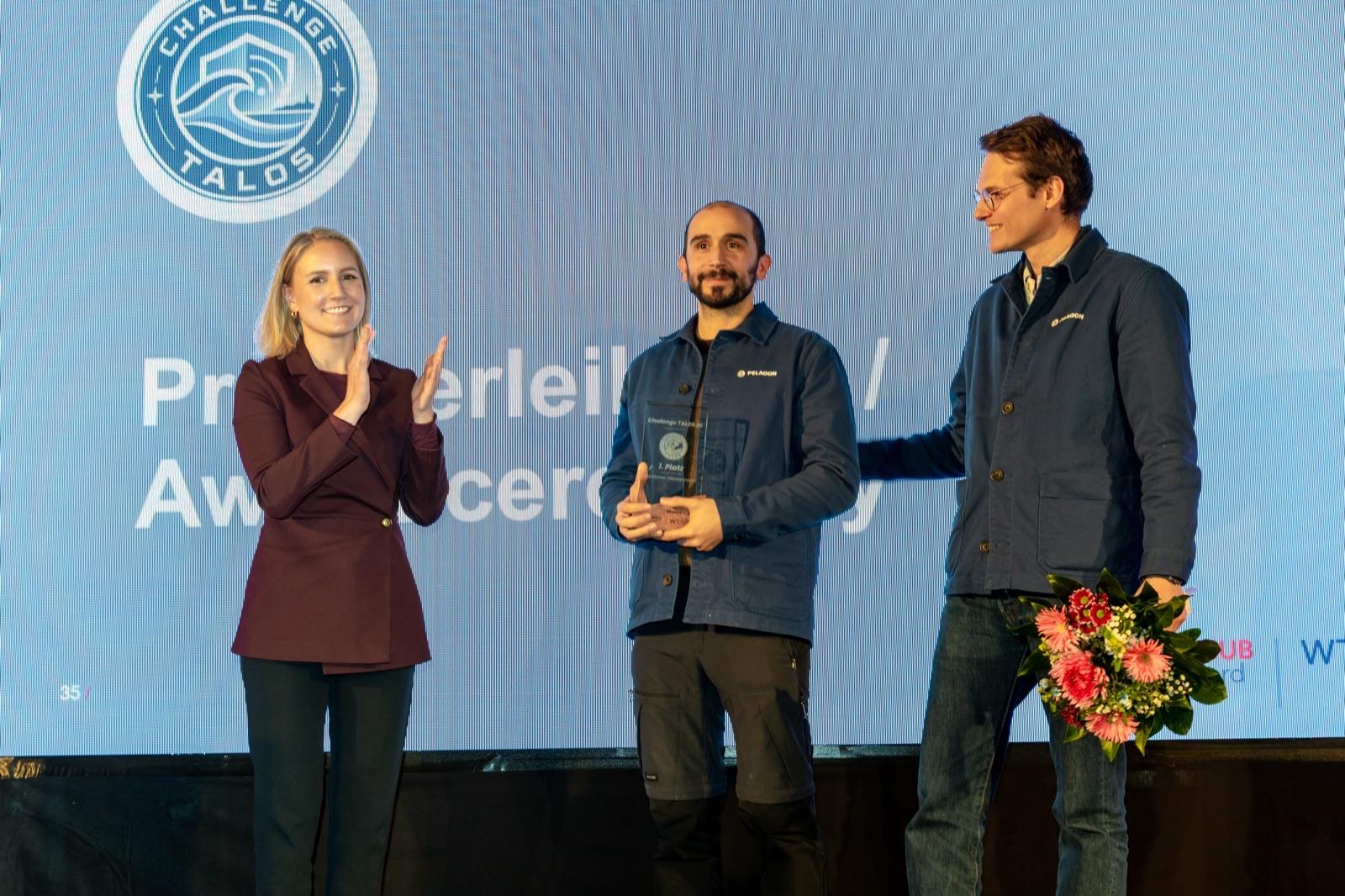
Pelagon has won Challenge TALOS 26, the challenge run by WTSH and its TechHUB SVI Nord with the German Navy and WTD 71 to protect harbour basins against unmanned systems above and below the surface, and against combat divers, in complex scenarios. Pelagon came out ahead of ELAC SONAR and EvoLogics, the two other finalists, after three days of tests in the harbour basin of the Marinearsenal in Kiel.
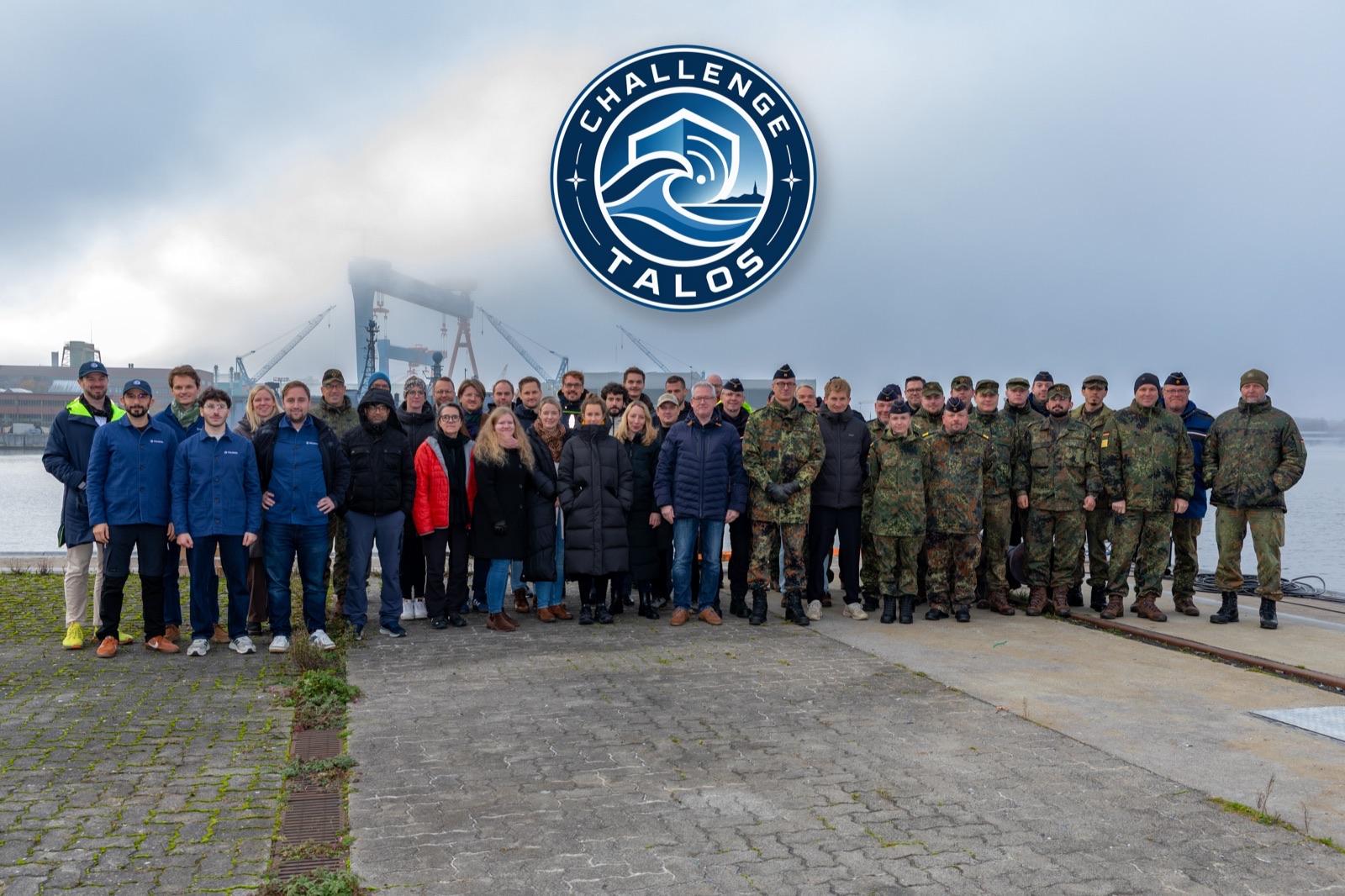
The challenge drew 13 applications from companies and research institutes in Germany, elsewhere in Europe and in Israel. Three finalists were selected to test their concepts in the harbour basin, in front of an expert jury drawn from science, industry, the Bundeswehr and user organisations. According to the organisers, Pelagon's concept stood out for its detection performance, its ease of deployment and use, and its low number of false alarms.
The award was presented in Kiel on 12 November by Julia Carstens, State Secretary for Economic Affairs of Schleswig-Holstein.
Maritime interdiction: detection and response working together
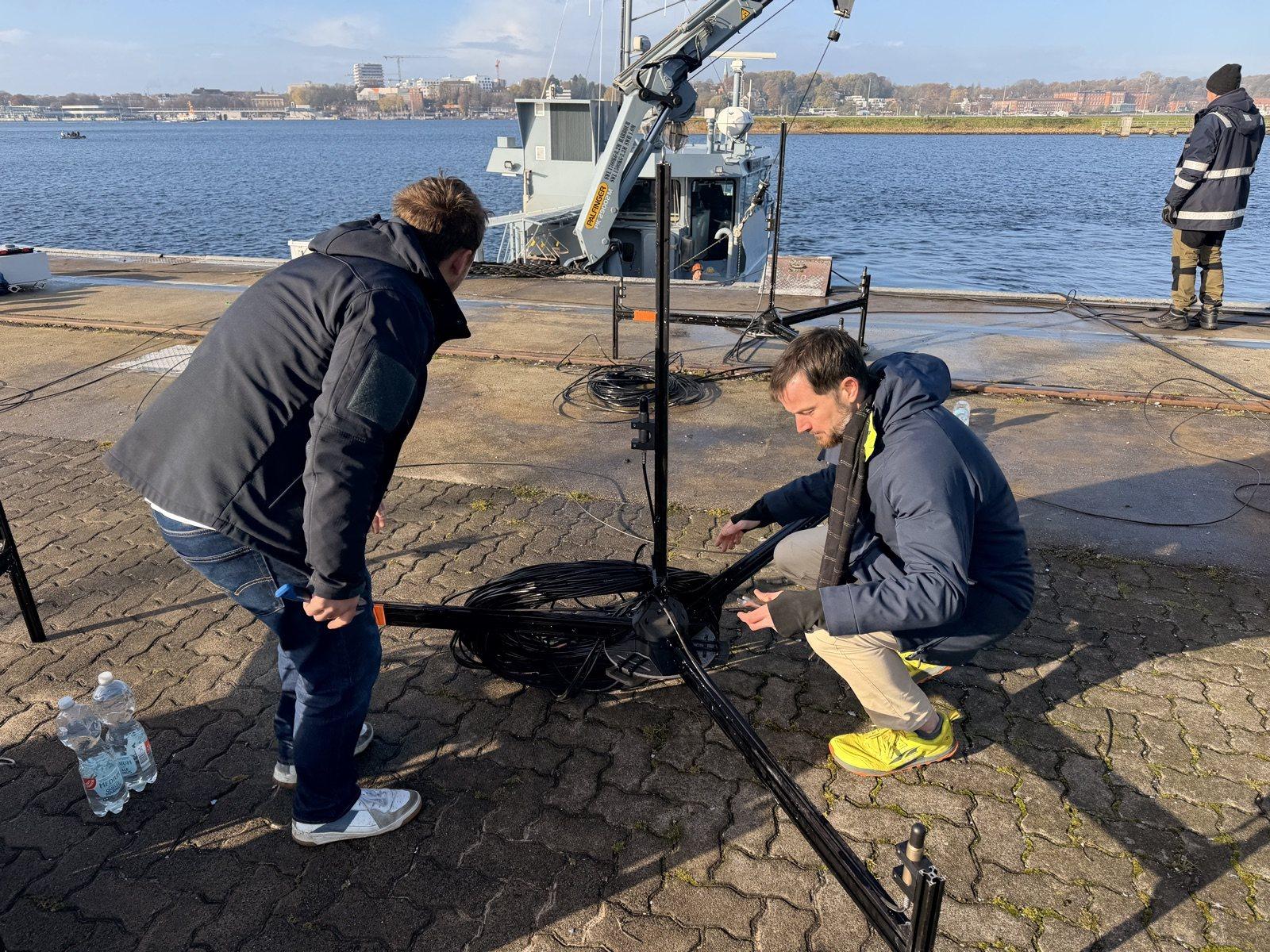
In Kiel, Pelagon deployed its mesh sensing network in the harbour basin of a working naval base.
“A harbour is one of the hardest places to listen underwater: traffic, echoes, noise everywhere. TALOS put our system in exactly those conditions, in front of a jury that includes the people who protect these sites. Being recognised for detection performance, ease of use and few false alarms matters to us, because an operator flooded with alerts stops trusting the system.”
Gauthier Bouxin, co-founder and co-CEO of Pelagon
Surface and underwater drones are now within reach of any state or armed group, leaving ports, naval bases, subsea cables and offshore energy sites exposed. In ports, noise and dense traffic make threats hard to pick out: protecting these sites calls for technology distinct from the sonar systems designed for the open ocean.
Pelagon was founded on one conviction: protecting what lies at sea takes detection and response working together. The company calls this maritime interdiction. The Pelagon Interdiction Dome brings together PEARLS, a mesh sensing network; ORCA, a maritime perception model that detects, localises and classifies threats; MARLIN, an underwater interceptor in development for inspection and interception, with the operator always in control; and Pelagon OS, the software that connects them and integrates with the operator's own systems.
Photos: T. Richter, WTD 71, and Pelagon
About Challenge TALOS
Challenge TALOS 26 is organised by WTSH (Wirtschaftsförderung und Technologietransfer Schleswig-Holstein) through its TechHUB SVI Nord, together with the German Navy and WTD 71, the Bundeswehr's technical centre for ships and naval weapons. Finalists tested their concepts over three days in the harbour basin of the Marinearsenal in Kiel.
About Pelagon
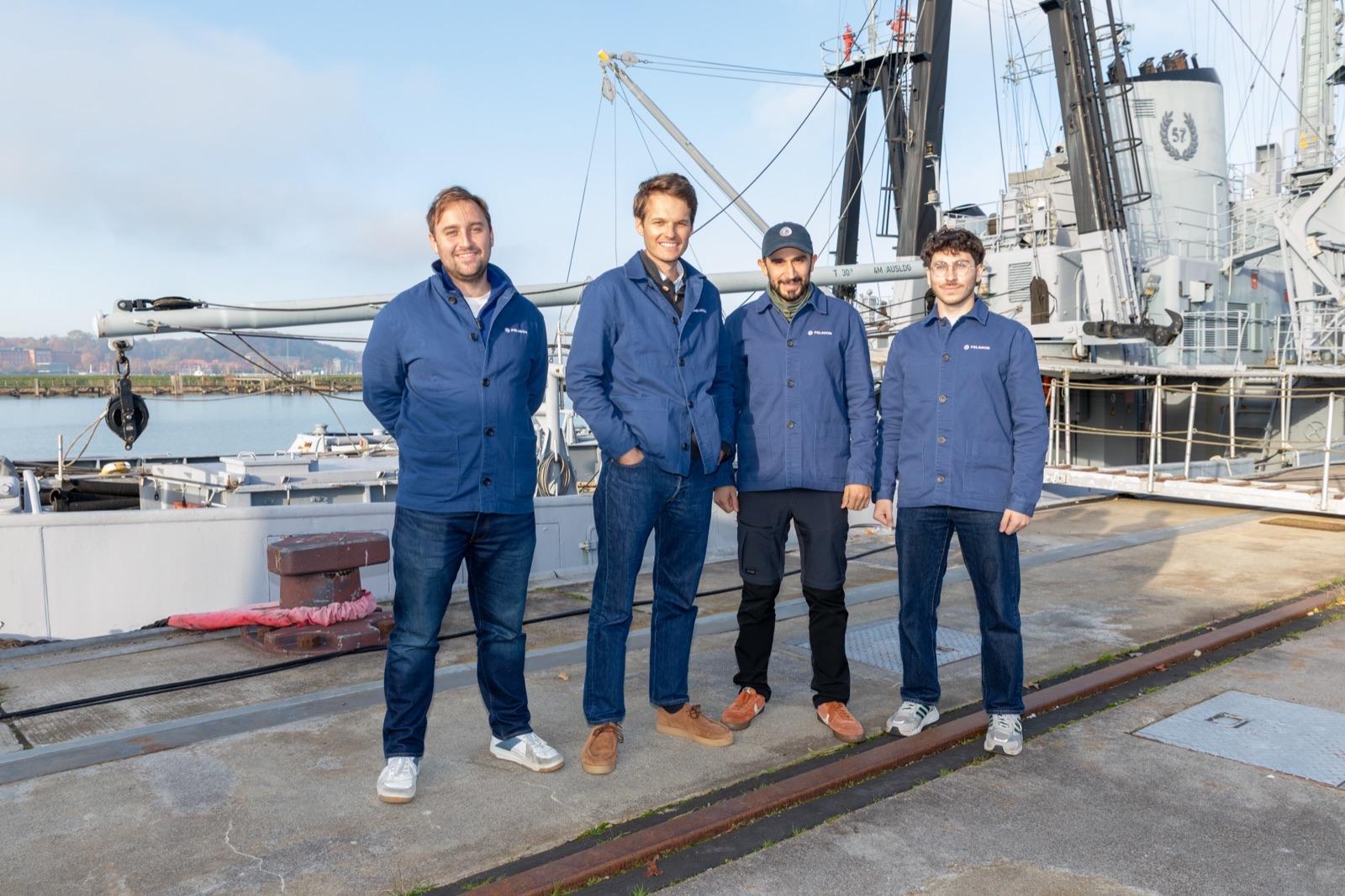
Pelagon is a European defence technology company bringing physical AI to the maritime domain. Pelagon designs, deploys and operates protection zones around ports and naval bases, offshore energy sites and subsea infrastructure, for European and Allied navies and civilian operators. Founded in 2026 by Gauthier Bouxin and Aymeric de Pontbriand, Pelagon is headquartered in Paris with an office in Marseille and is backed by Bpifrance, Elaia, Seedcamp and Hexa.